Roses always have been special to the Missouri Botanical Garden. When beginning his botanical garden, founder Henry Shaw wrote a small book on the emblem of his native England, “The Rose.” “Human art can neither colour nor describe so fair a flower,” he wrote in 1882. “[Its] beauty is composed of all that is exquisite and graceful.”
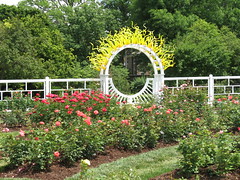
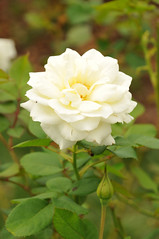
Visitors to the Missouri Botanical Garden’s two rose displays can feast their eyes on over 1,500 individual plants encompassing 250 varieties.
The Gladney Rose Garden has been in existence since 1917, when it housed many old garden roses. It has evolved over the years to its present giant wagon-wheel shape. About 900 roses are displayed, including many varieties of climbing roses featured on the formal fence enclosing the garden.
The Anne and John Lehmann Rose Garden, established in 1976, has been called the more romantic of the two gardens, with a bushy mix of floribundas, shrub roses and other classifications. It is less formal than the Gladney Rose Garden, and contains about 600 roses representing 154 different varieties.
The Lehmann Rose Garden also mixes the delight of aromatic flowering plants and water. The Shapleigh Fountain is set in a circular brick plaza 50 feet in diameter with three curtains of water that rise and fall.
The middle terrace beds hold a collection of "Old Garden" Roses, roses developed before the 20th century, known for their large blooms and intense fragrance.
The upper level of the garden contains the Lehmann Gazebo with a fountain and pool, offering a shady respite during peak blooming time. The upper level contains many modern varieties including favorites such as 'Peace' and 'Chrysler Imperial' as well as several selections to have come out of the Earth-Kind® trials program. The southern half of the upper terrace hosts the David Austin English Rose Trials, featuring fifteen varieties selected to do well in our climate.
Edging the first terrace is the Kercheval Pool, a low bubbling fountain.
A mix of species roses and perennials grow on the lower terrace, showing how roses can be featured among other plants.
The Garden's collection contains roses known for their hardiness and disease resistance in the St. Louis region.